




Inspection & Testing
Inspection & Testing is carried out after new electrical work and will usually provide you with a Minor Works Certificate or Electrical Installation Certificate, it is also recommended periodically to ensure your wiring is safe, Insurance companies often require an inspection in order for your business insurance to be valid. This used to be referred to as a Periodic Inspection (you might have a sticker on your fusebox or distribution board advising when this was last done and when it should be done again) The terminology has since changed to EICR - Electrical Installation Condition Report.
Landlords - If you rent out a property, the government has extra requirements that you must now comply with. These new Regulations require landlords to have the electrical installations in their properties inspected and tested by a person who is qualified and competent, at least every 5 years. Landlords have to provide a copy of the electrical safety report to their tenants, and to their local authority if requested. The correct term is an EICR - Electrical installation condition report, previously known as a Periodic Test and may be referred to as a landords certificate. The EICR is an in depth inspection of the entire electrical installation. Unlike the Gas certificate which is carried out annually and completed in usually less than 1 hour, the EICR can take up to an an entire day to complete but may not need to be re-inspected for up to 5yrs.
The Regulations came into force on 1 June 2020 and form part of the Department’s wider work to improve safety in all residential premises and particularly in the private rented sector. This is a major step towards levelling up the private rented sector, making sure it will offer high-quality, safe and secure housing. Along with social and owner-occupied sectors. In order to comply with these new rules, you must ensure that all your properties have either an:
- Electrical Installation Certificate - Completed within the last 5yrs, but ensure it covers the entire installation, this could have been issued for small additions which would not meet the new rules. Newly rewired or a new build should have an electrical installation certificate.
- Electrical Installation Condition Report - Completed within the last 5yrs and with a Satisfactory result, Un-Satisfactory reports need to have all C1, C2 and FI issues updated or repaired. An electrical installation certificate would be issued to prove these issues have been improved. A further EICR is not required until the date recomended in the report.
The full requirements can be viewed here.
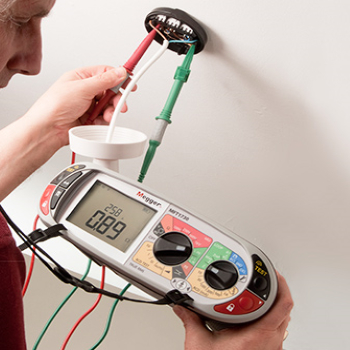
How often is an Electrical Installation Condition Report (EICR) required?
Electrical installations should be Inspected and Tested as follows:
The table below provides guidance on the frequency of formal inspections of electrical installations as well as routine checks. (Table extracted from BS7671 IET Wiring Regulations 18th Edition: 2018).| Type of Installation | Routine check |
Maximum period between
inspections and testing as necessary |
General Installation |
||
|
Domestic accommodation -
general Domestic accomomdation - rented houses and flats |
-
1 year |
change of occupancy/10 years
change of occupancy/5 years |
|
Residential accommodation (Houses of
Multiple Occupation) - halls of residence, nurses accommodation, etc. |
1 year | change of occupancy/5 years |
| Educational establishments | 6 months | 5 years |
| Industrial | 1 year | 3 years |
| Commercial | 1 year | Change of occupancy/5 years |
| Offices | 1 year | 5 years |
| Shops | 1 year | 5 years |
| Laboratories | 1 year | 5 years |
Hospitals and Clinics |
||
|
Hospitals and medical clinics -
general areas Hospitals and medical clinics - medical locations |
1 year
6 months |
5 years
1 year |
Buildings open to the public |
||
| Cinemas | 1 year | 1-3 years |
| Church installations | 1 year | 5 years |
|
Leisure complexes
(excluding swimming pools) |
1 year | 3 years |
| Places of public entertainment | 1 year | 3 years |
| Restaurants and hotels | 1 year | 5 years |
| Theatres | 1 year | 3 years |
| Public houses | 1 year | 5 years |
| Village halls/Community centres | 1 year | 5 years |
Special and specific installations
|
||
| Agricultural and horticultural | 1 year | 3 years |
| Swimming pools | 4 months | 1 year |
|
Caravans
Caravan parks |
1 year
6 months |
3 years
1 year |
| Highway power supplies | as convenient | 6-8 years |
| Marinas | 4 months | 1 year |
| Fish farms | 4 months | 1 year |
| Emergency lighting | daily/monthly | 3 years |
| Fire alarms | daily/weekly | 1 year |
| Launderettes | monthly | 1 year |
| Petrol filling stations | 1 year | 1 year |
| Construction site installations | 3 months | 3 months |
Other times when an EICR should be carried out are:
- When a property is being prepared for letting or a change of tenancy
- Before selling a property or buying a previously-occupied property
- Damage has occurred to the installation IE. Fire, Flooding, Vandalism, Lightning Strike
These times are a guide and generally for a newly rewired or new build property, when the inspection is carried out the electrician will make a decision on the recommended retest time based on the condition of the installation.
After the inspection has been completed you will be issued with a report (EICR) on the condition of the electrical installation, although this will be described as Satisfactory or Unsatisfactory, it contains detailed information on whether the installation is suitable for continued use and may have particular observations coded as follows:- C1 - Danger Present
- C2 - Potentially Dangerous
- C3 - Requires Imporvement
- FI - Further Investigation Required
- C1 indicates there is a Danger Present and immediate action should be taken, the electrician should not wait to issue the paperwork, the defect should be rectified or the circuit isolated immediately
- C2 indicates that although the defect is not currently dangerous, under fault conditions it could pose a hazard to users of the installation
- C3 - indicates that the defect, whilst is not considered to be a source of immediate or potential danger, improvement would contribute to a significant enhancement of the safety of the electrical installation. This is often due to new regulations that have been put in place since the original installation

- Adequacy of earthing and bonding
- Suitability of the switchgear and control gear
- Consumer Unit
- An old fusebox with a wooden back
- Cast iron switches
- An untidy mixture of such equipment is likely to need replacing
- Serviceability of equipment - Switches, Socket-Outlets and light fittings
- Older round pin sockets
- Round light switches and braided flex hanging from ceiling roses to light fittings
- Black switches
- Sockets mounted in skirting boards may require replacing
- Type of wiring system and its condition
- Cables coated in black-rubber
- Cables coated in lead or fabric
- Provision of residual current devices for socket-outlets & Circuits in Bathrooms
- Presence of adequate identification and notices
- Extent of any wear and tear, damage or other deterioration
- Changes in use of the premises which have led to, or might lead to, deficiencies in the installation